

Your Cart
No products in the cart.
VAT:
0,00 €
Insured Delivery:
Free
Total:
0,00 €

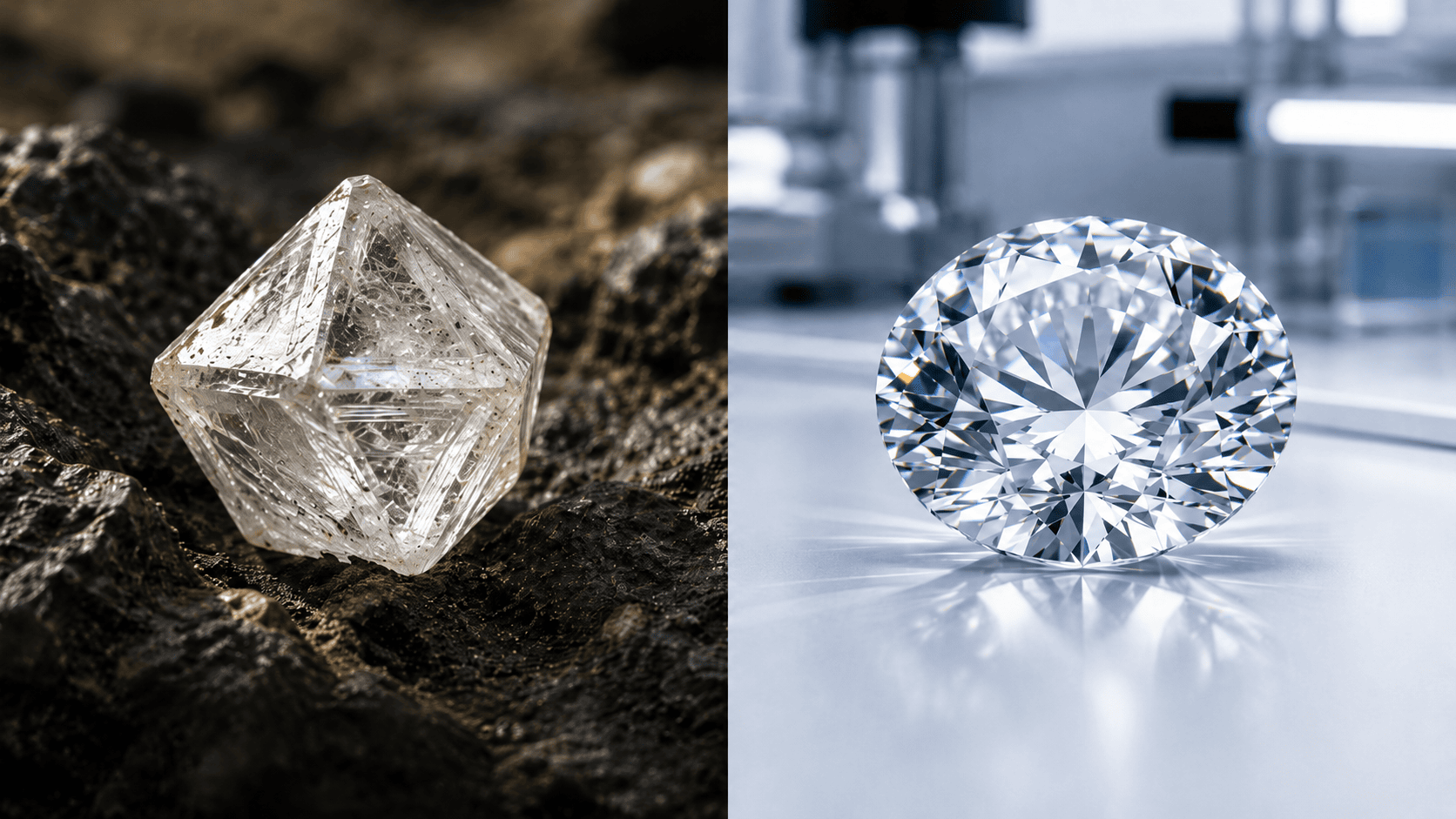
One lost 96% of its value. Guess which. That is not a market correction—it is a technological product following its natural trajectory. If you still conflate lab-grown with natural as interchangeable assets, you are about to learn an expensive lesson.
1-Carat Comparison: $1,000 vs $4,200
– A 1-carat lab-grown diamond retails in the USA around $1,000 in 2026. A natural diamond of the same size commands about $4,200. That is an 80–90% price gap reflecting two fundamentally different markets.
– Lab-grown wholesale fell to $220–$300 per carat (ring size) by mid-2025. Natural diamonds benefit from finite supply and rising extraction costs. The divergence is structural, not temporary.
Geologic Scarcity Preserves Value
– Natural diamonds retain 40–60% of retail on the secondary market. GIA certification is the gold standard for preserving worth.
– Stones over 3 carats follow an aggressive value curve—investment-grade natural diamonds act as a true store of value.
– New mine discoveries have slowed to a trickle; existing mines are reaching end of lifecycles. De Beers carefully manages supply to prevent volatility. Provenance adds a premium collectors find indispensable.
Lab-Grown Follows the Tech-Product Model
– A 1.5-carat lab-grown diamond dropped 96% from its 2018 peak—a depreciation curve similar to that of a flagship smartphone.
– The infinite supply paradox: factories can produce endless colorless, flawless stones. Scarcity, the engine of jewelry value, does not exist.
– Retailers now find it cheaper to buy fresh inventory from a laboratory than to buy back pre-owned stones. Analysts believe prices are nearing the production cost floor in 2026; future value may stabilize around industrial semiconductor use.
Certification and Channels Dictate Return
– For natural diamonds, a GIA certificate enables resale at 20–60% of original retail. For lab-grown, the new Premium/Standard categories (introduced late 2025) provide clarity, but resale return is typically 10–30%.
– Private sales yield the highest returns for natural stones. Online marketplaces for pre-owned sustainable luxury are gaining popularity. Original receipts and grading reports are essential for maximum retention.
Two‑Thirds of Gen Z Choose Lab‑Grown
– Approximately two-thirds of Gen Z buyers now choose lab-grown diamonds, prioritizing ethical transparency and the ability to secure a larger stone for their budget.
No correction available without further information. Older demographics still prefer the natural “Real is Rare” narrative. Modern couples view diamonds as lifestyle expression, not a financial hedge. The market has matured: both options are respected without compromise.
Redirected Capital Grows Elsewhere
– The $3,200 saved on a 1-carat lab-grown stone vs. natural can be invested in diversified assets or natural gemstones. Lab-grown allows a larger stone for the same budget.
– Semi-mount settings protect metal value independent of diamond fluctuations. Platinum and 18K gold have intrinsic commodity value. Handcrafted settings from master jewellers retain worth through superior artistry. The semi-mount strategy enables future center‑stone upgrades.
Defined by Choice – Heirloom or Modern Brilliance
– Natural: 40–60% retention, store of value, a piece of earth’s history. Lab-grown: immediate brilliance, lifestyle asset, financial flexibility. Both are valid—provided you understand the trade-off.
– Our master jewelers have handcrafted bespoke pieces since 2000, using only conflict-free, ethically sourced materials. Explore our natural and lab-grown collections with expert guidance.
Originally reported by blog.javda.com.







No products in the cart.