

Your Cart
No products in the cart.
VAT:
0,00 €
Insured Delivery:
Free
Total:
0,00 €

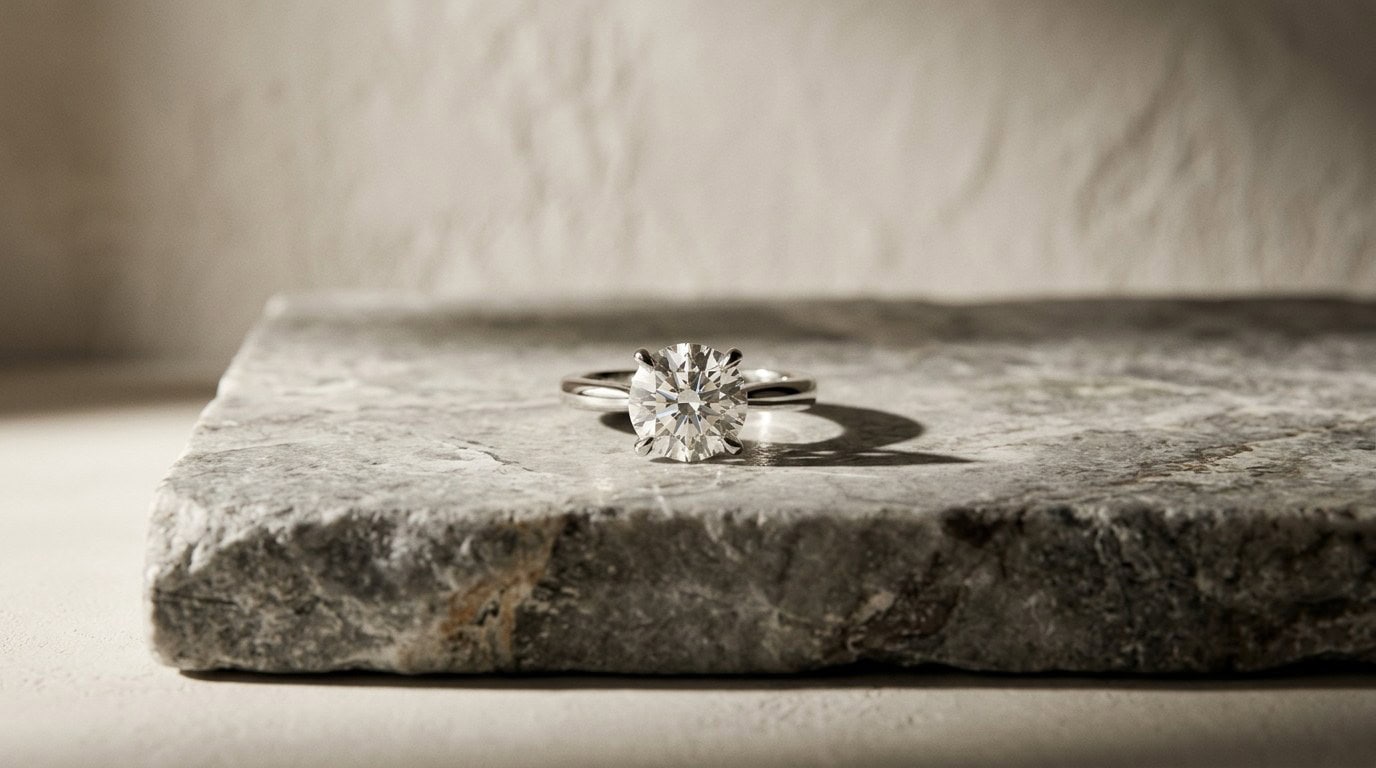
Lab-grown diamonds now account for the majority of diamond ring sales in the United States. That headline landed in early 2025, and the reaction from most corners of the trade was a collective shrug. Not because the news is unimportant — but because anyone watching the market over the past three years saw it coming from a mile away. The real story isn’t the percentage. It’s what the percentage reveals about consumer behavior, industry structure, and the permanent rewiring of a centuries-old market.
The surface narrative goes like this: price-conscious millennials and Gen Z buyers are choosing lab diamonds because they’re cheaper. A 2-carat lab stone costs a fraction of an equivalent natural diamond, so young couples can get a bigger ring without breaking the bank. Social media has inflated expectations around carat size, and lab diamonds let buyers keep up. The natural diamond industry is under pressure, but the old guard insists that ‘real’ diamonds will always hold their value and their mystique.
That story is true as far as it goes. But it misses the deeper mechanics.
Buyers aren’t spending less on rings. They’re spending the same amount — or slightly more — and buying dramatically larger stones. A couple who would have budgeted $8,000 for a 0.5-carat natural diamond can now get a 4-carat lab diamond. The ring budget hasn’t shrunk. The carat-per-dollar ratio has exploded.
This changes everything. It’s not a substitution of one product for another at the same price point. It’s a category shift that allows consumers to access a completely different tier of goods for the same money. A 4-carat ring used to be a statement piece reserved for the wealthy. Now it’s a baseline option for a dental student with loans.
Three forces are driving this, and they’re all structural.
First, production scale. CVD and HPHT reactor technology has matured to the point where high-quality colorless lab diamonds can be produced reliably at scale. The marginal cost of growing an additional carat is low once the reactor is running. That’s not true of mining, where each carat requires moving tons of earth.
Second, retail margin dynamics. A jeweler who sold a natural diamond with a 40% margin made $3,200 on an $8,000 stone. A jeweler selling a lab-grown diamond at a 40% margin on an $8,000 stone would have a cost basis likely lower than that of a mined diamond, given lab-grown diamonds are generally priced lower than their natural counterparts. Wait, that’s the same math. The point is that margins on lab diamonds can be structured to be equally profitable for retailers, even though the absolute price is lower. The trick is that lab diamonds don’t have the same upstream cost structure. The dealer’s cost is lower, so the retail price can be lower while margins hold.
Third, consumer psychology. The resale value argument against lab diamonds is a red herring. Natural diamonds have terrible resale value relative to retail — typically 30-50% of purchase price, often less. A couple buying a $20,000 natural stone loses $10,000+ the moment they walk out the door. The resale value of lab-grown diamonds can be lower than that of natural diamonds, but the exact loss varies depending on several factors, including the quality of the diamond, market conditions, and resale channels. The absolute loss is smaller. The percentage loss is similar. The ‘investment’ narrative was always marketing, not finance.
The winners are clear: consumers, especially younger buyers with real financial constraints like student loans and housing costs. Also winners are nimble independent jewelers who adapted early and aren’t carrying heavy natural diamond inventory. Some of the most candid voices in the trade — like veteran New York dealer David Friedlander — have openly described the shift: ‘We do a fraction of the volume we did years back but we’re still viable.’
The losers are the large, capital-intensive natural diamond players. The companies that own massive mines, maintain huge inventories, and rely on controlled supply to prop up pricing. The oligarchic structures on 47th Street in New York, where Indian-owned conglomerates now dominate, are sitting on vacant lots and razed buildings — physical metaphors for a market that’s been hollowed out.
Also losing: the romantic mythology that natural diamonds are uniquely tied to love and commitment. That narrative is eroding fast. Consumers increasingly see a lab diamond as identical in every meaningful way — visually, chemically, optically — and they’re right. Even under magnification, there’s no difference.
For anyone buying or selling diamonds today, the implications are concrete. If you’re a buyer, you can get a stone that would have cost $50,000 a decade ago for under $5,000. The only meaningful trade-off is the absence of a ‘natural’ origin story — and for most people, that story has never been more important than the ring on their finger.
If you’re a retailer, your business model needs to account for a world where the average engagement ring stone is 2-3 carats, not 0.75-1 carat. Your inventory mix, your pricing strategy, your marketing — all of it has to reflect the new reality. The dealers who survive will be the ones who embrace the shift rather than fight it.
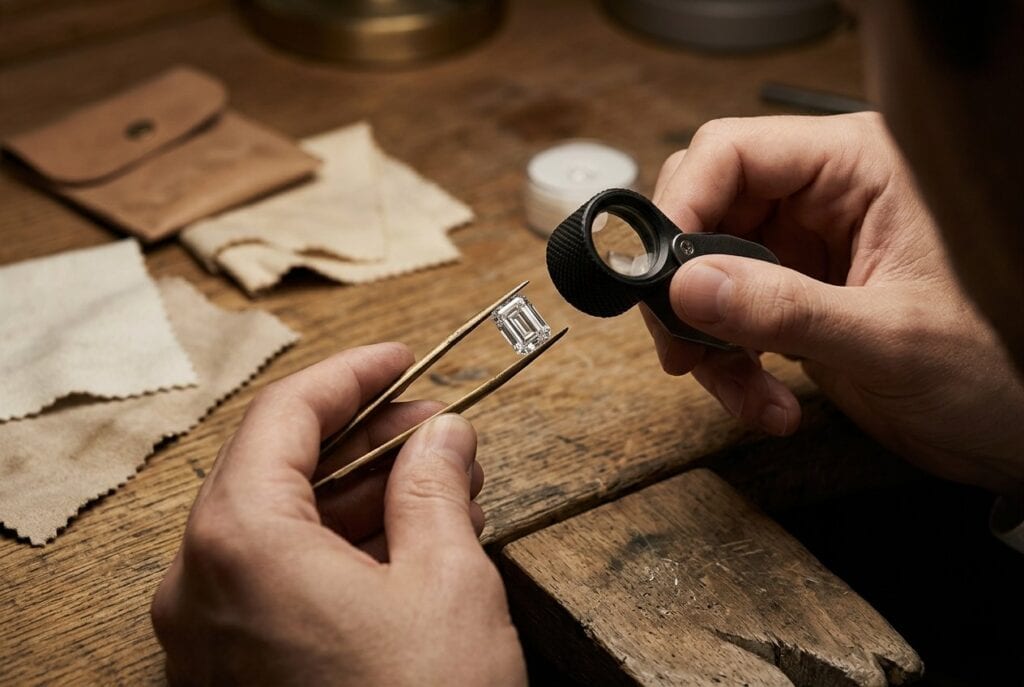
Lab diamonds are not a trend. They are the new baseline. Exceptional natural diamonds will retain a niche market among collectors and traditionalists — think of them like vintage watches or rare art. But for the vast majority of engagement ring buyers, lab diamonds are now the default choice.
The next frontier is brand differentiation. As lab diamonds become commoditized, the value will shift to cut quality, design, and the overall buying experience. The houses that win will be the ones that treat lab diamonds not as a cheaper alternative, but as a superior product in their own right — consistent, traceable, and beautiful without the baggage.
At AZENA Gemstones, that’s exactly what we’re building. Lab-grown diamonds, IGI certified, cut to precision standards, and delivered with the service and transparency that the new generation of buyers expects. The tipping point has passed. The question now is what you do with it.
Originally reported by pricescope.com.







No products in the cart.